 Compono
"A florist who built a robot to listen" - Edan Haddock
 Compono
Edan Haddock went from arranging flowers to leading talent across six countries at Movember. His AI agent Joel interviews candidates so humans don't...
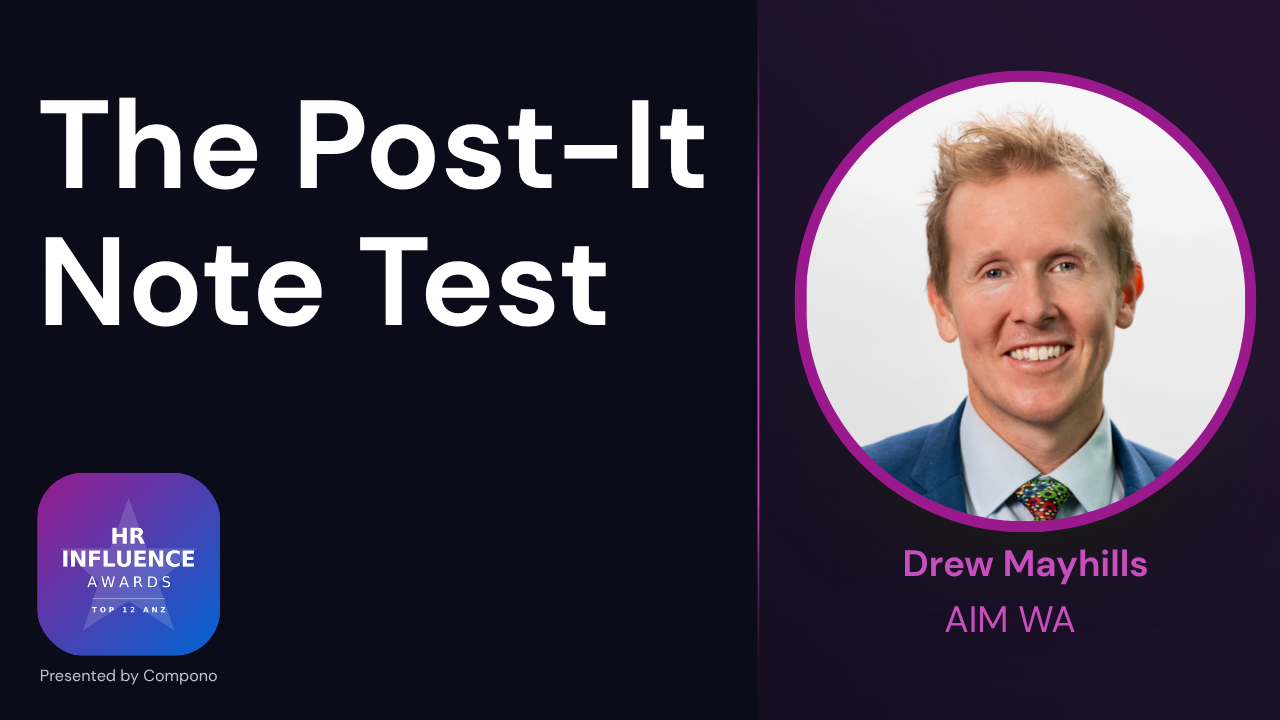
Drew Mayhills keeps a Post-It note on his desk. It's a tally. He marks it every time someone on his team volunteers a new idea - unprompted, openly, without being asked.
A Harvard Business School professor gave him the idea. AIM WA, where Mayhills works, brings HBS faculty to Perth once a year, and Professor Linda Hill suggested it as a diagnostic. A simple way to read the health of your culture. So, Mayhills tried it.
Watch the full interview with Rudy Crous above.
"Weeks went by where I realised, hey, I've got an empty Post-It note here," he says. "And it's not because people in my team don't have great ideas. It's all the assumed stuff. Drew's too busy. I suggested an idea last time, it didn't really happen, why would I bother?"
He's direct about what that meant. The empty note wasn't a reflection of his team; it was a reflection of his team's culture - so he did something about it.
Drew Mayhills is the Chief Learning and Innovation Officer at the Australian Institute of Management, Western Australia, where he oversees the design and development of more than 130 courses and leads the organisation's innovation agenda. He is a 2023 Churchill Fellow, a Fellow of the Australian Institute of Management (FAIM), and one of the 2026 HR Influence Awards Top 12 ANZ. The judges described his combination of "Churchill Fellowship credentials, documented First Nations leadership outcomes, and applied AI training at scale" as unlike anything else in the cohort.
But before any of that, he was in a van.
"I started out as a full-time musician," Mayhills says. "I dropped out of uni four times to go and play on tour in bands."
He loved it. He doesn't romanticise the music career, but he's clear about what it gave him - a deep appreciation for creativity, for working with people, for making something out of nothing on a tight timeline.
After the band years came education, then technology, then a stint as an art director, then coaching. He calls it a 'squiggly line career.' He's comfortable with that now, though he's honest that it didn't always feel comfortable to live through.
"When you're looking forward it doesn't seem to make a lot of sense," he says. "It's much easier to connect the dots looking backward."
What holds the whole thing together, he reckons, is a willingness to learn. "In many ways, my path is unique, but I think everyone's is. I've covered a lot of ground because I love to learn and I'm interested in lots of different things."
The Churchill Fellowship, which he received in 2023, was where the dots converged. He'd applied in 2022, right at what he calls "the ChatGPT moment." His research focused on AI for teacher effectiveness and equity in remote communities - education, technology and people all meeting in one place. The things he'd been circling his whole career.
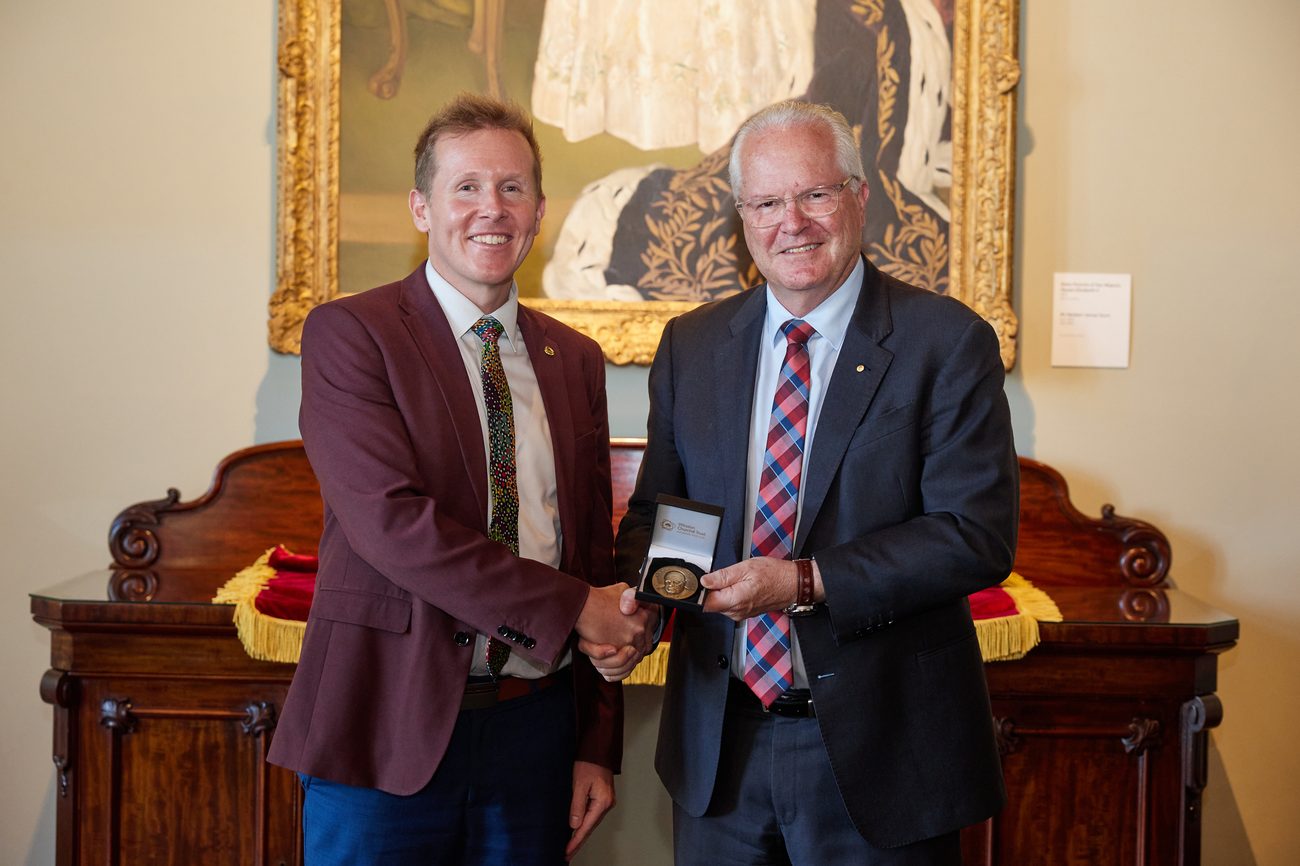
The Fellowship changed how Mayhills thinks about Learning and Development, though perhaps not in the way you'd expect from someone who now leads AI training at scale.
"It showed that there's a marked difference between the rate at which the world is shifting and the rate at which the mechanisms that build teacher and school leader capability are changing," he says. "They're on wildly different tempos."
But the finding that stuck most wasn't about speed. It was about what gets lost when you strip the human parts out of education in pursuit of efficiency.
"Learning is a relational, social and creative endeavour," he says. "We might be able to 10X the rate at which we produce lessons or mark papers. We can put AI on that and completely accelerate it - even though I think we should ask whether that's even worth doing anymore. What we can't 10X is the rate at which relationships are built, the rate at which trust is built."
He makes it concrete. "I'm sure you can think of one great teacher who took an interest in you," he says. "Who'd come in on Monday and ask, hey, how was footy on the weekend? They demonstrated interest in you as an individual. We don't want to lose that nuance in the rush to optimise everything."
From his own experience as an early adopter, he says AI has done something for him that most people don't talk about. "I've adopted those tools in a way that has not just enabled me to produce more, but actually freed me up to have more time for people in my team. To listen more effectively. To reflect more deeply."
He calls AI 'a partner in thinking.' A sparring partner, not a shortcut. "I'm not looking for the easy output or the answer," he says. "I'm looking to be challenged, to take different perspectives, to draw on expertise and insight that otherwise wouldn't be available to me."
When asked which project means the most to him, Mayhills is torn. Two programs sit side by side. One looks to the past, one to the future. He considers both essential.
The first is Beediyar. "It looks like Beediyar, it's pronounced Brid-ee-yah," he explains. "It's the Noongar word for boss or leader." The program aims to accelerate the trajectory of First Nations leaders and managers into senior roles. Seven have received senior promotions. Four have been appointed to boards.
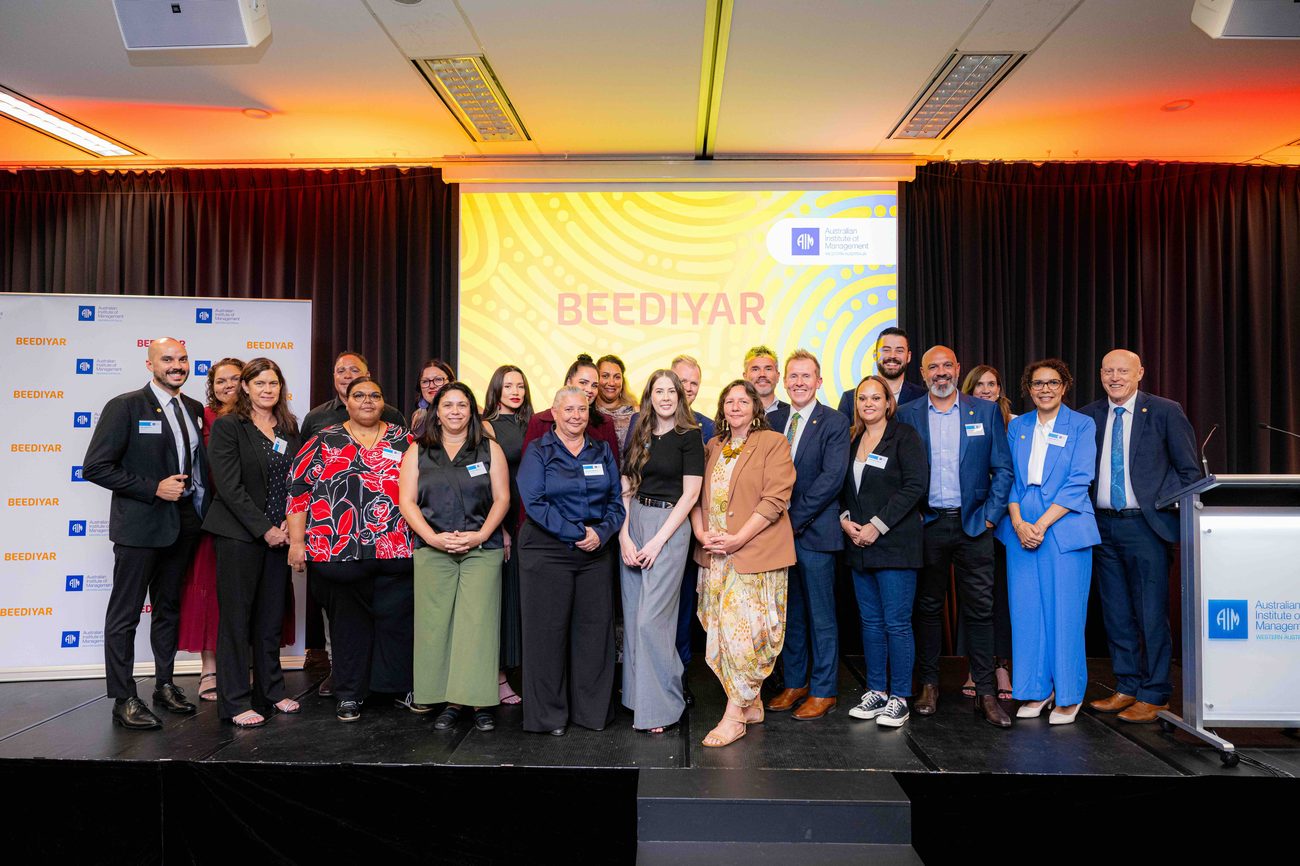
"There's been a lot of good work done historically to move Aboriginal people through organisations," he says. "But we know from the data that they are acutely underrepresented in significant leadership portfolios. Beediyar exists to change that."
He frames it simply. "Aboriginal Australians represent the longest living culture in human history. Clearly that reflects a significant leadership contribution that Aboriginal people are more than ready to make. And if AIM WA can play a small part in helping Aboriginal people to progress in their leadership journeys, we all stand to benefit from that."
He calls himself a steward of the program, not its owner. "I think it's a privilege to be part of that," he says.
The second project is the Fundamentals of AI in the Workplace course, which has now reached hundreds of professionals through AIM WA's network. Mayhills shares the credit immediately. "I've had the privilege of facilitating to lots of people, the facilitators representing AIM WA have collectively trained many more."
The course grew directly out of his Churchill Fellowship research. Its purpose, he says, isn't just upskilling. It's about giving people agency.
"There's a lot of people out there who have just checked out of AI because they're overwhelmed by it, they're intimidated by it, it's confusing," he says. "The second they feel like they're beginning to understand what it might mean for them, the landscape completely shifts again."
He wants to give those people a foothold. "So that they're actually shaping that narrative rather than just reacting to it."
Mayhills has thought carefully about why people resist AI at work. The answer isn't really about the technology.
"There's a gap between the number of people who use AI at work and the number of people who disclose their use of AI at work," he says. The reasons people stay quiet are telling. "They cite fear of being perceived as lazy. Fear of being perceived as incompetent. Fear of making everyone else look bad."
He paints a picture. Imagine you're doing great work, stretching yourself, contributing at a high level, using these tools to help you do it. But the rest of the team isn't there yet. "You might find yourself socially excluded for shining too brightly."
And then the last reason - arguably the most legitimate. "People are worried they'd be complicit in making themselves redundant."
For Mayhills, all of this lands squarely on leaders. "I think it's incumbent on leaders to get ahead of that. To understand it, so they can make it safe for people to explore this and take advantage of it and be clear-eyed about the risks. That's actually a significant leadership challenge."
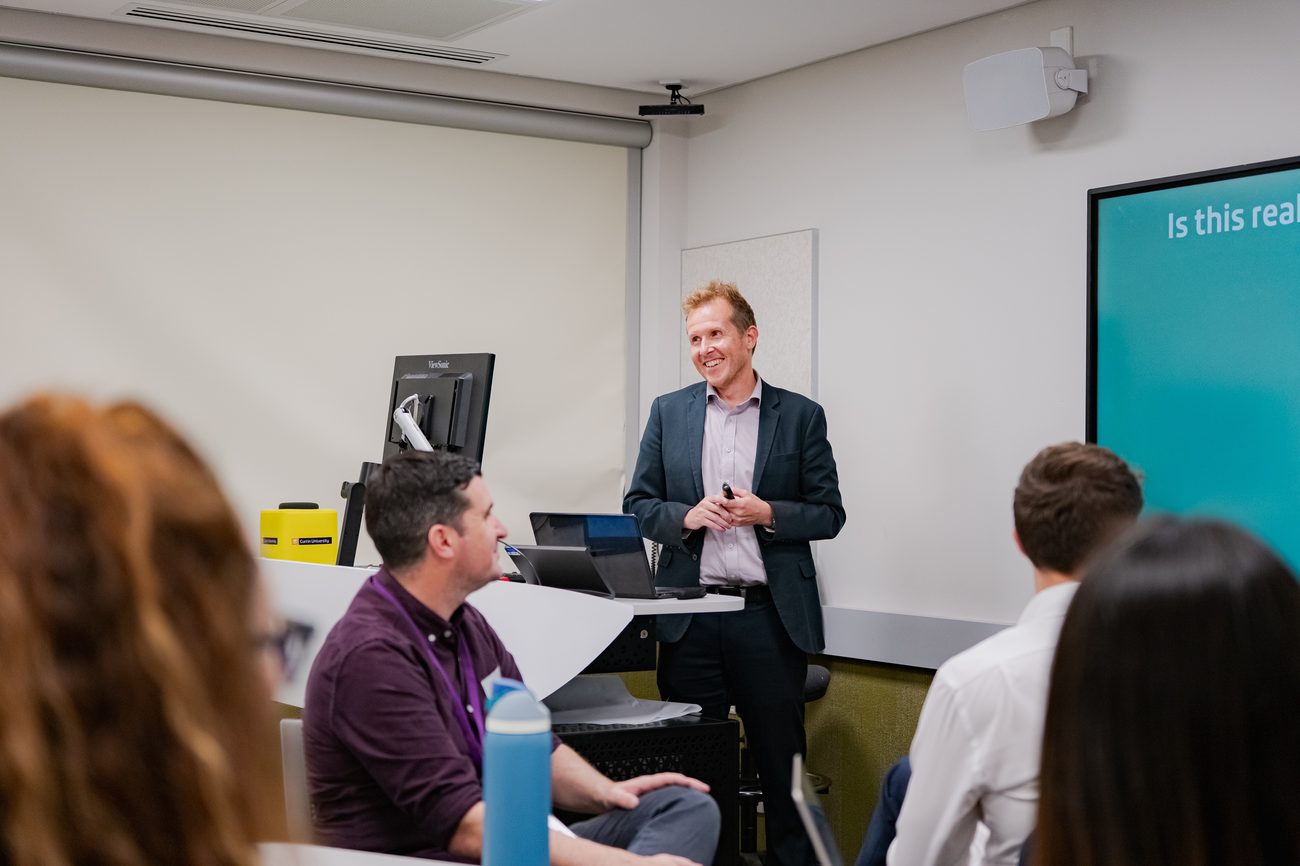
Culture, for Mayhills, is built in the small repeated actions. Not the big declarations. "It's about paying attention to the small things and the big things consistently," he says. "It doesn't conclude at the end of the offsite or the training course. We might kick that off, but you can't build culture in a day or two days."
He sees AI making one part of culture work easier and another part harder. "It's never been easier, with AI tools, to produce a poster of your values and get some nice words on it. That's the easy part," he says. "The harder part is underscoring those values with behaviours and then committing to the work of living and modelling them."
Which brings him back to the Post-It note. When ideas started showing up with greater frequency, he took it as a signal the culture was moving. "It doesn't mean we're going to act on all of them," he says. "But the fact that people feel willing, safe and able to volunteer them — for me, that's a signal things are healthy."
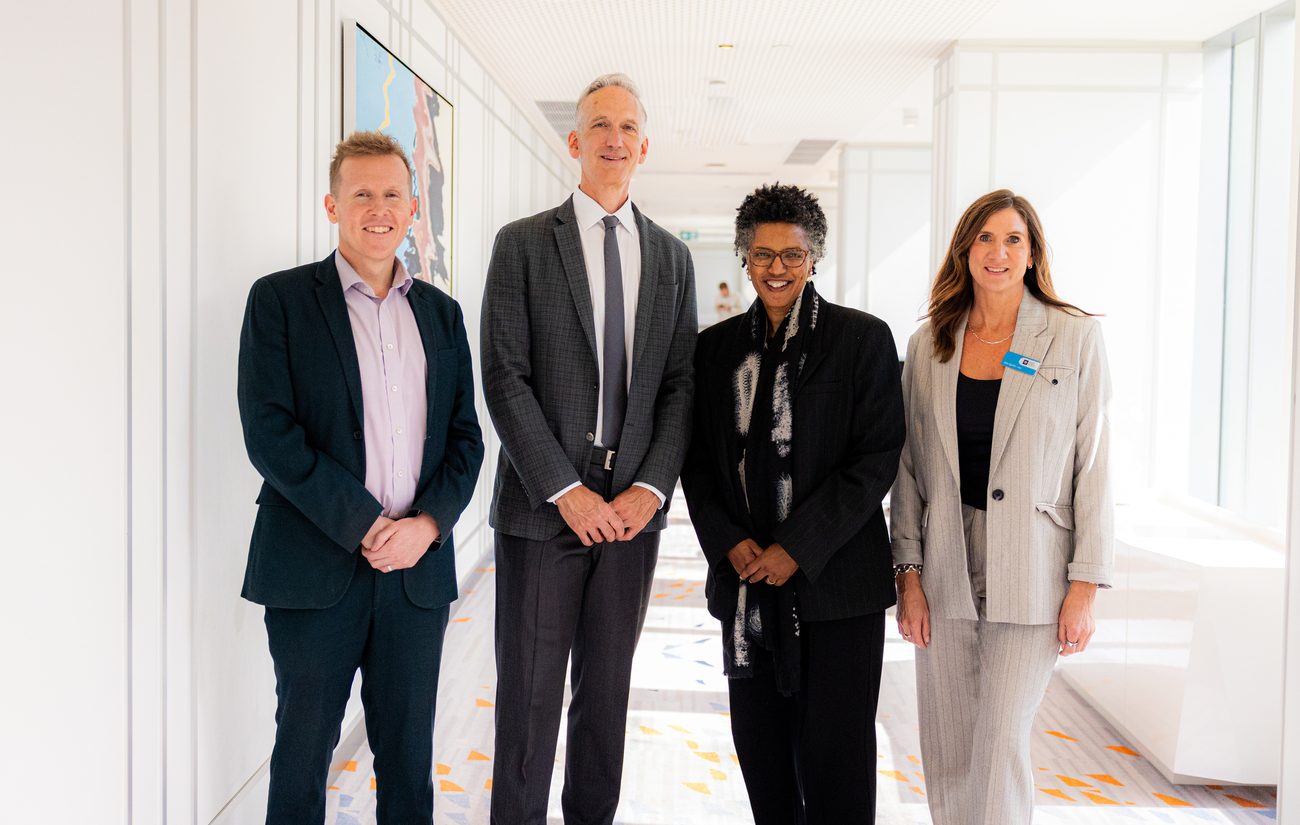
Mayhills was raised on the golden rule - do unto others as you would have done unto you. He suggested that this is incomplete.
"Treat others how they wish to be treated," he says. The difference sounds subtle. The work underneath it isn't. It means actually knowing each person. Their work preferences, their dispositions, their context.
When he started at AIM WA, he ran one-to-ones with three questions. Firstly, tell me about you - beyond work. Secondly, what should I absolutely not muck around with here? And finally, if you had a magic wand, what's one thing you'd want me to try to improve for the organisation?
"New leaders barge in, throw things around and get people offside by failing to take stock of what's valued here," he says. The three questions, run across a team of twenty, produce individual stories but also patterns. Quick wins emerge. Problems surface that nobody had raised before.
He's also honest about a mistake. He hired someone exceptionally talented. No question about their capability - they were outstanding, and still are. But the way they operated had a disproportionate impact on the team.
"I hired for capability when I should have hired for cultural alignment," he says. "What I came to see, fairly quickly, is that there's no place for that. I'd go further - I don't think there's a place for that anywhere."
It took time to see it as useful. But the lesson reshaped what he hires for now. "Openness to feedback and the self-awareness that sits around that - that's right up there on what I look for."
Three things.
First, relationships. "Relationships are everything," he says. "It's not the content, it's not the program documents, it's not the strategy. It's the relationships you build and maintain over an extended period of time."
Second, patience with reinvention. The squiggly line career wasn't always fun to live through. "Those moments of change were scary and I felt quite uncertain," he says. "But you do it enough times and you realise - I have skills here, I can learn, I'm going to be okay."
Third, have the hard conversations sooner. "Whether it's a difficult conversation with a colleague, respectfully challenging a senior leader's decision, or just recognising something's not working — the longer you leave it, the harder it gets. You can be kind about it. You can be respectful about it. Just don't sit on it."
That Post-It note on his desk is filling up these days. He's earned that. But he'd probably tell you the note was never really about counting ideas. It was about counting the moments he was actually available to hear them.
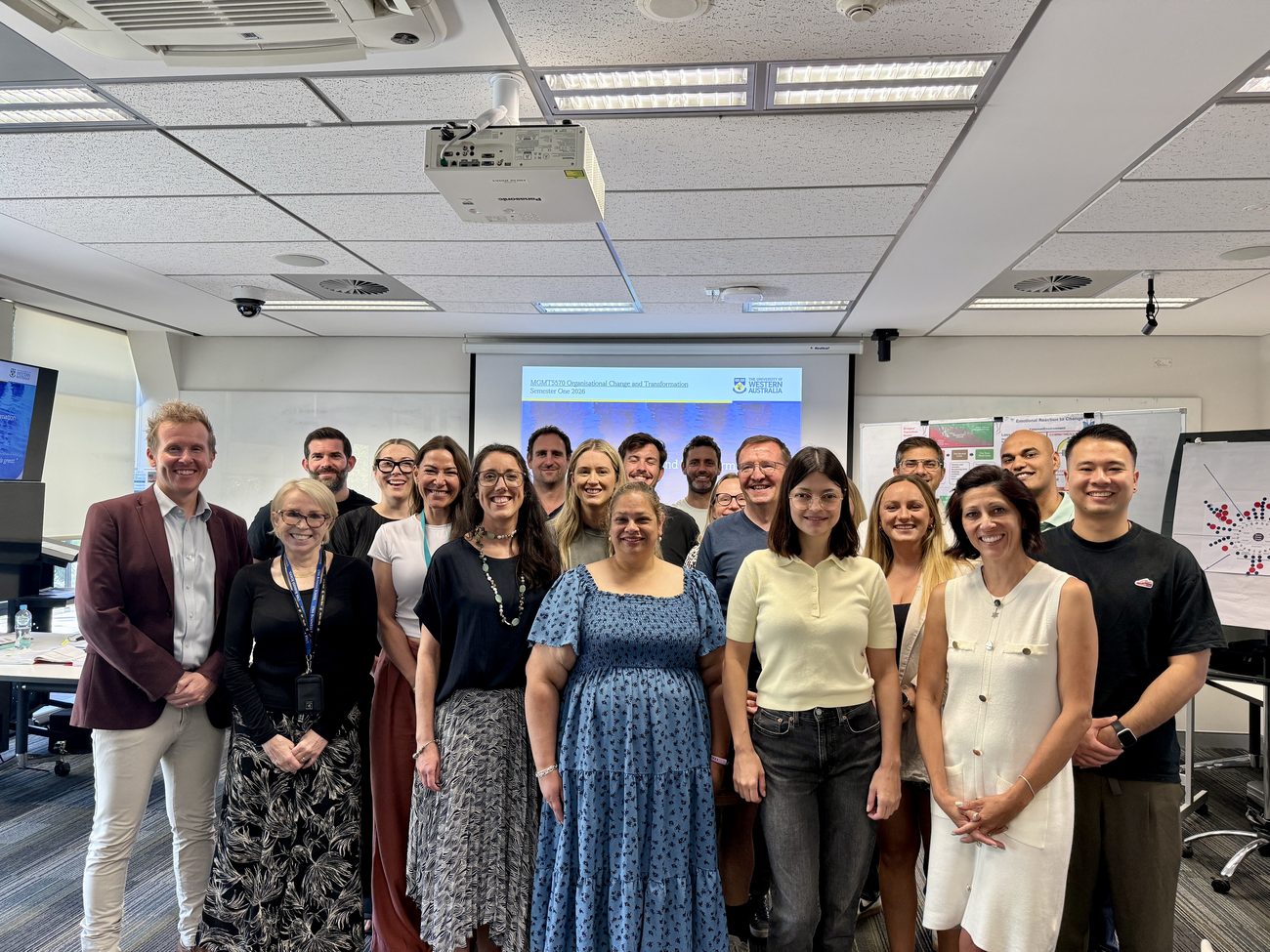
Drew Mayhills is Chief Learning and Innovation Officer at the Australian Institute of Management, Western Australia, Perth. He is a 2026 HR Influence Awards Top 12 ANZ, a 2023 Churchill Fellow, Fellow of the Australian Institute of Management (FAIM), Microsoft Innovative Educator Expert, FAPSTC board member, and Curtin University HR/OB Advisory Panel member. Connect with him on LinkedIn.
#HRInfluenceAwards
The HR Influence Awards 2026 Top 12 ANZ are presented by Compono.
Full details at hrinfluenceawards.com.au.
Edan Haddock went from arranging flowers to leading talent across six countries at Movember. His AI agent Joel interviews candidates so humans don't...
Teresa Lilly built the people foundations startups forget. From scaling a fintech 60% in a year to founding Culture Pilot Co, she shares what most...
Sharon Gray, CPO at OzHarvest, on building psychological safety, leading with transparency, and creating a culture where purpose drives every...